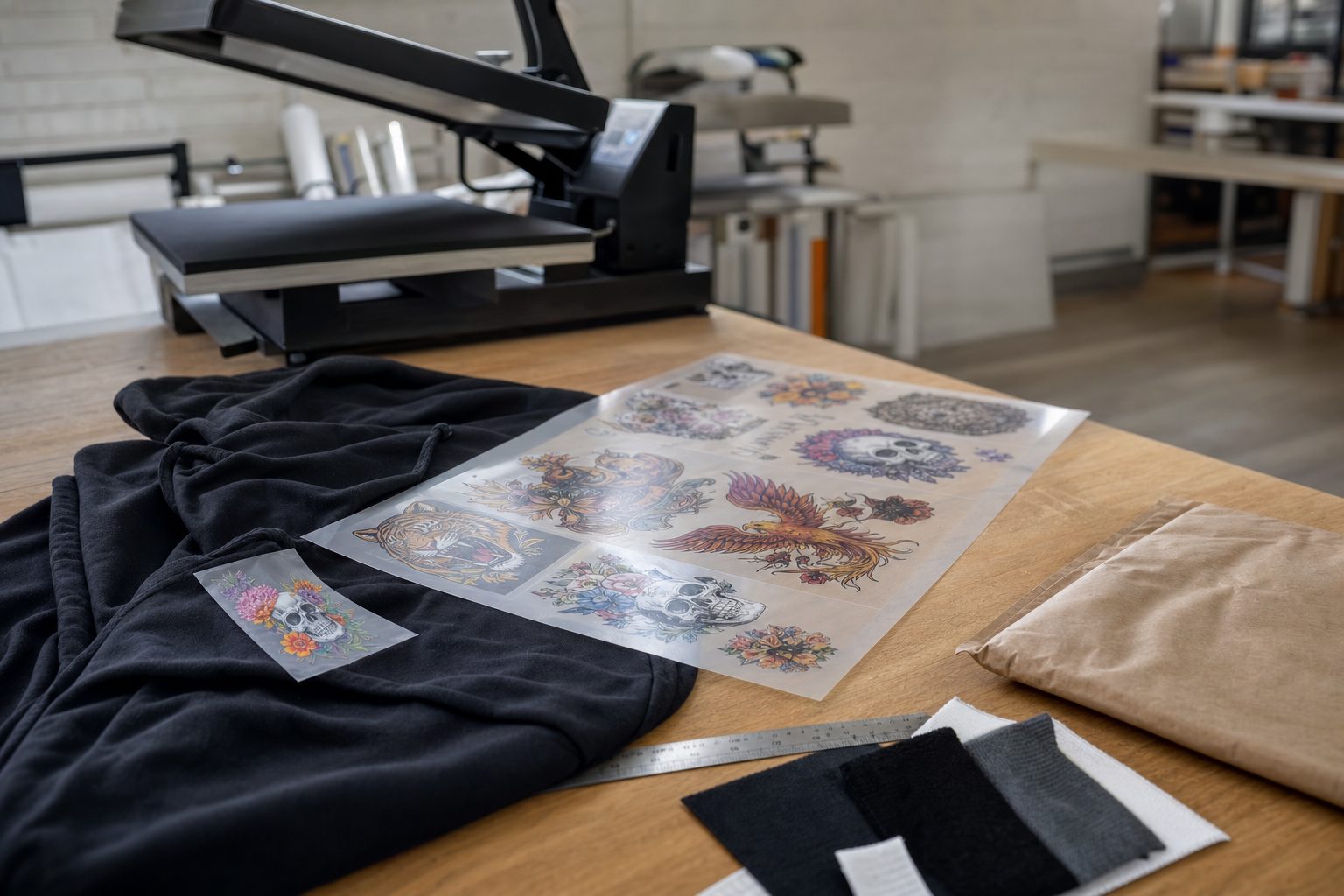
A good DTF transfer supplier saves you from three expensive problems: bad color, bad files, and late jobs. Price matters, but repeatability matters more. If the transfers press clean, survive washing, and arrive when promised, your shop can sell with confidence.
What should a DTF transfer supplier explain upfront?
A serious supplier tells you how to prepare art before you order. Ask for file type, background rules, minimum resolution, color guidance, and fabric limits. For most shops, the safe starting point is a transparent PNG or flattened TIFF at 300 DPI. If the supplier cannot explain this clearly, your team will pay for it later in reprints and support calls.
When should you use a gang sheet?
Use a gang sheet when you have several designs, sizes, or repeat prints that can fit on one film sheet. The point is simple: fewer wasted inches, fewer separate files, and fewer chances for someone to place the wrong size. A good builder should make counts, spacing, and final sheet size obvious before checkout.
Build a custom DTF gang sheet with Formulated Prints
When is UV DTF a better fit?
Textile DTF is for garments like shirts, hoodies, hats, and cotton or polyester blends. UV DTF is for smooth hard goods like glass, mugs, metal, and packaging. Do not treat them as the same product with a different name. The surface, adhesive, finish, and customer expectation are different.
See UV DTF permanent stickers from Formulated Prints
How do you test a supplier before moving volume?
Order samples before you move a real customer job. Press them on the garments you actually sell. Wash them. Stretch them. Check small text, gradients, and solid color blocks. A sample tells you more than a price table because it shows the transfer, the adhesive, and the print behavior in your own workflow.
Request free DTF samples from Formulated Prints
What file rules should customers know?
Give customers a plain checklist: upload high resolution art, use a transparent background when needed, avoid screenshots, confirm the printed size, and check spelling before approval. This sounds basic until one bad upload ruins a same-day run. Clear file rules reduce back-and-forth and make the supplier relationship easier to scale.
Learn the DTF workflow from Formulated Prints
Final supplier checklist
Before you commit, check five things: clear art specs, sample quality, predictable turnaround, gang sheet tooling, and support that understands print production. If those are in place, software like Pro Transfers Builder can keep orders and artwork organized while the supplier handles the print work.