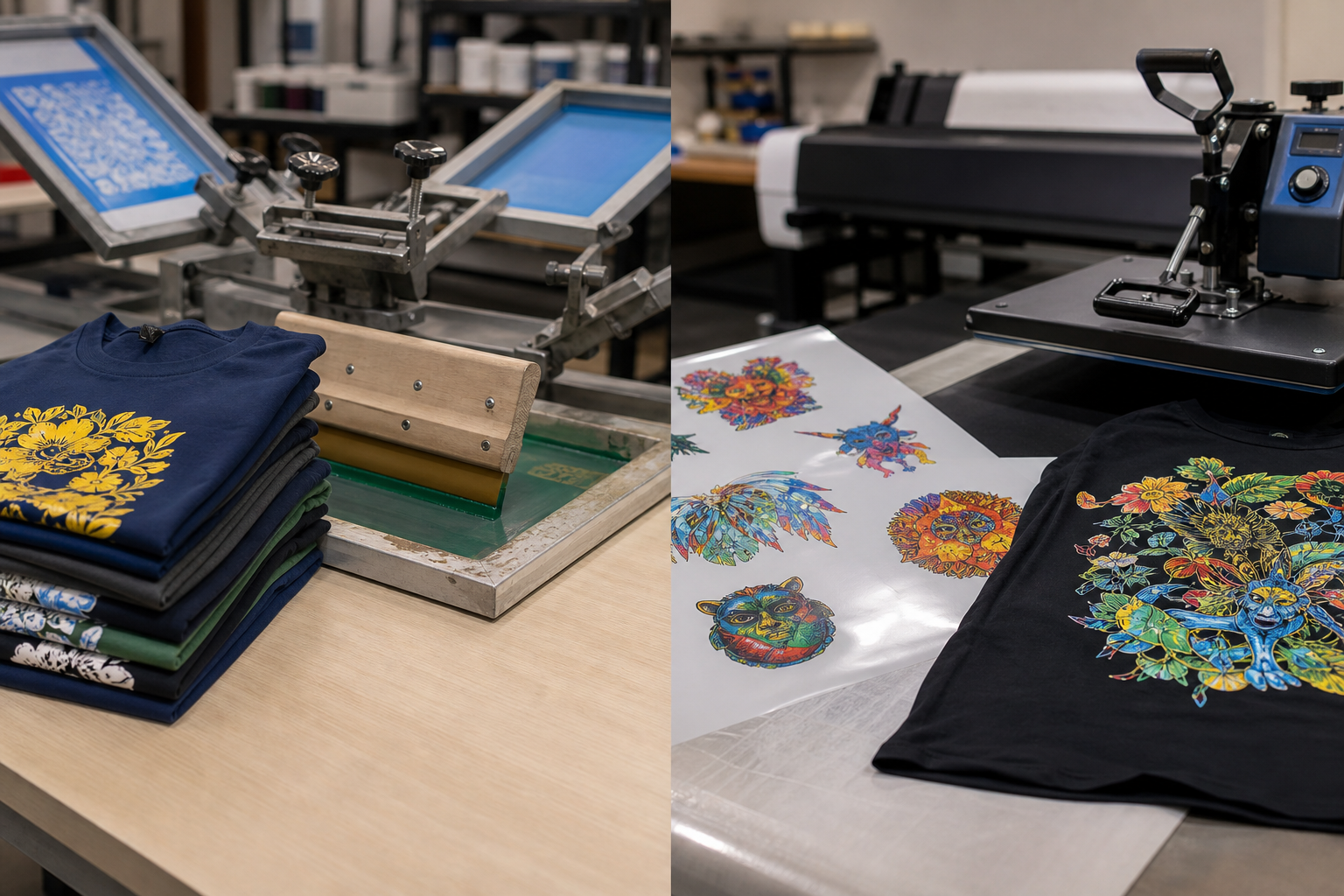
DTF vs sublimation shirts is not a contest about which method is better overall. It is about fabric, order size, and how the design should feel on the shirt. Sublimation dyes polyester fibers. DTF sits on top of the fabric and works on cotton blends most customers already wear.
When sublimation wins
Sublimation shines on white or light polyester when you want the print to feel like part of the fabric. All-over prints, gradients, and soft hand on performance tees are common sublimation jobs. You need polyester content and a light base color. Dark cotton hoodies are not a sublimation job.
When DTF wins
DTF wins for cotton tees, hoodies, tote bags, and small runs with many colors on dark garments. You do not need minimums tied to screen setup. Upload art, nest on a gang sheet, press at the shop or buy pressed blanks from a supplier. For event merch and bakery aprons, that flexibility usually beats sublimation.
Durability and wash tests
Both methods fail when buyers skip testing. Wash one sample on a normal cycle before you order fifty shirts for a market weekend. Sublimation can fade on the wrong poly blend. DTF can peel when press settings are wrong. Compare after wash, not just fresh off the press.
DTF vs screen printing for small runs
Order custom DTF transfers from Formulated Prints
If you sell both methods, label products clearly in your store so buyers pick the right fabric path before upload. Fewer wrong-fabric orders means fewer reprints and happier repeat customers.