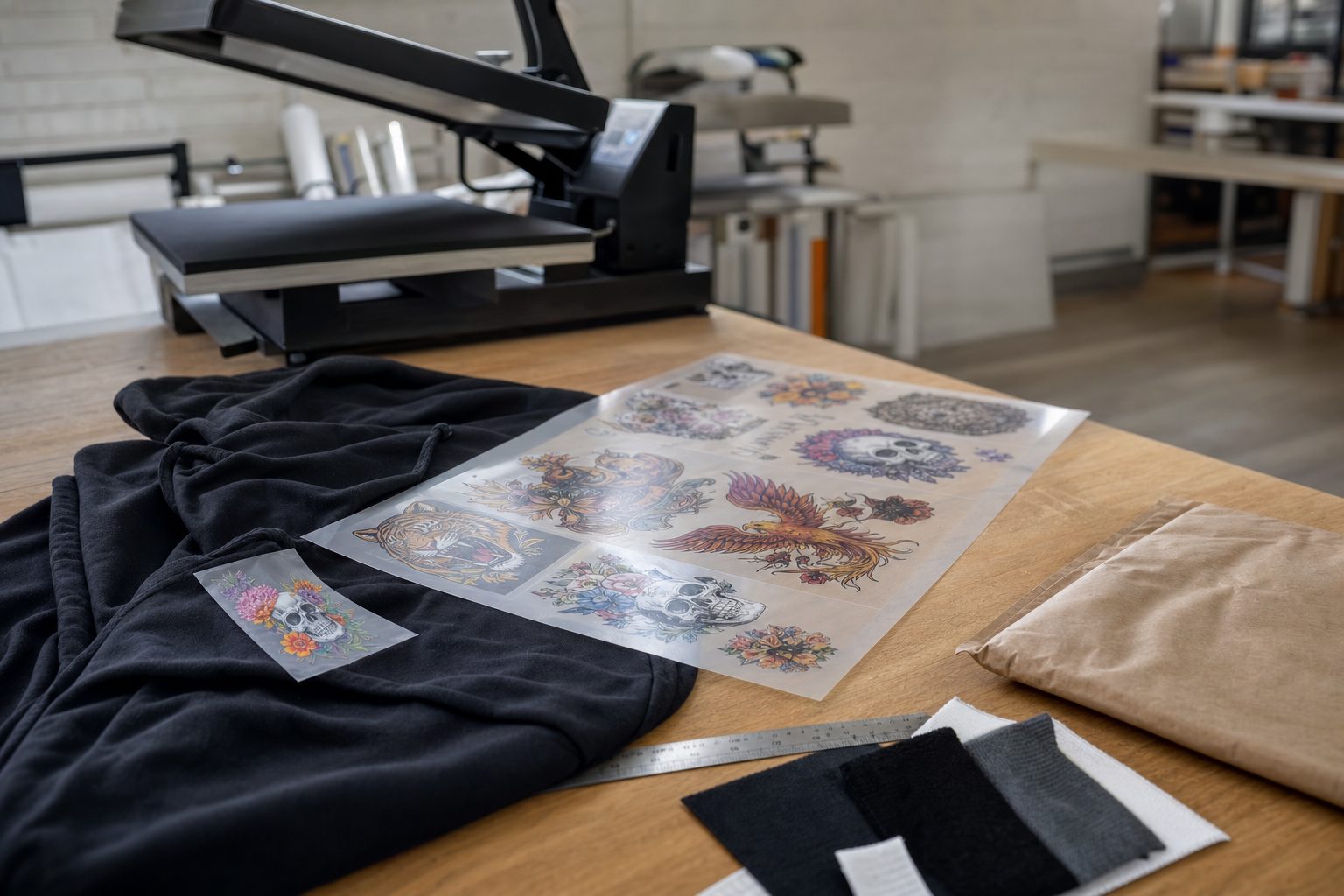
Gang sheet nesting is how DTF shops protect margin. Empty film is empty money. Over-nesting causes collisions, misprints, and reprints that erase whatever you saved on ink.
Set non-negotiable margins
Leave head and tail margin for your printer grip. Keep side clearance for powder coverage. Document minimum gap between jobs so auto-nest does not place two whites edge to edge where cure varies.
Group jobs by profile when you can
Mixing a heavy white job with fine type on the same cure pass works until it does not. Batch similar ink loads when deadlines allow. Rush singles still happen; defaults should not assume every sheet is a random mix.
Rotation and grain
Rotate only when art allows. Logos with registration marks hate surprise angles. Small left-chest prints nest efficiently upright; odd shapes sometimes need manual rotation with a second eye on bleed.
When to override auto-nest
VIP repeat customers with fixed layouts, jobs with fragile halftones, and sheets near film width limits deserve manual review. Auto-nest is a draft, not a blind approve.
Gang sheet builder software with auto-nesting
Measure waste monthly
Track unused film area per sheet and reprint rate per nest. If waste drops but reprints rise, your gaps are too tight. Adjust once and teach the team why.